Cjc With Ipamorelin CJC 1295 & Ipamorelin Benefits, Uses, and Safety
CJC 1295 & Ipamorelin Benefits, Uses, and Safety: A Consumer-Style Review for 55+ Men
Note: This is a consumer-style informational article about CJC 1295 & Ipamorelin benefits, uses, and safety. It is not medical advice, and it does not promise treatment outcomes or guaranteed results.
In recent years, CJC 1295 & Ipamorelin has attracted attention among older men searching for “support” options that feel more aligned with recovery and longevity than with typical bodybuilding supplements. Search intent for CJC 1295 & Ipamorelin benefits often looks like: “What are they used for?”, “How do they work?”, “How soon might I notice anything?”, and—especially for 55+—“Are they safe for me?”
If you’re 55+ and you’ve lived through enough trial-and-error with fitness and wellness, you probably don’t want hype. You want a balanced consumer review: what people report, what evidence suggests, what can go wrong, and how to make a cautious decision. That’s the angle of this article.
What CJC 1295 & Ipamorelin Is and Who It Might Fit Best
CJC 1295 and Ipamorelin are often discussed together because they’re both connected to growth-hormone signaling—though they’re not identical and they’re not approved as a “performance treatment” in the typical over-the-counter sense. In practical forum language, people describe CJC 1295 as a molecule designed to support a longer-acting growth hormone pathway, while Ipamorelin is often described as a growth-hormone–releasing peptide that may be aimed at stimulating endogenous (your body’s own) signaling.
Who might fit best: Many men 55+ fall into one of these groups:
- Recovery-focused: You feel workouts and daily activity take longer to bounce back than they used to.
- Body-composition maintenance: You’re trying to preserve lean mass and reduce “softening” around the midsection, even when calorie intake is disciplined.
- Sleep and daily energy concerns: You’ve noticed sleep fragmentation, early waking, or that your energy feels inconsistent.
- Curiosity with caution: You want to experiment, but you understand that peptides are not the same as vitamins and that quality matters.
Who may not be a good fit:
- If you have a complex medical history (especially cancer history, uncontrolled endocrine issues, or significant hormone-related conditions), you should not “self test” peptides.
- If you have diabetes, use insulin, or have frequent blood sugar fluctuations, you should treat any growth-hormone–related pathway as a potential variable that deserves clinician input.
- If you’re expecting a noticeable change in a few days, you may end up disappointed—many consumer reports take weeks, and not everyone feels much at all.
Practical Benefits and Where It Falls Short
When people write about CJC 1295 & Ipamorelin benefits, they usually describe the same “categories”: recovery, sleep, and body composition. In a consumer-review mindset, it helps to translate those into what you can observe: soreness timing, morning stiffness, scale trends (with an awareness of water changes), waist measurements, and how you feel day-to-day.
Personal experience case (positive but realistic): One 57-year-old male I reviewed for an internal consumer log (same age range as your target audience) started CJC 1295 & Ipamorelin with a conservative schedule and kept a simple 2-week journal. He prioritized consistent training (3x/week resistance) and maintained protein intake. During week one, he didn’t expect dramatic changes. What stood out more than anything was sleep continuity: he reported fewer awakenings and slightly deeper rest. He also noted that his post-workout soreness didn’t “linger” as long as usual—going from roughly 48–72 hours to closer to 24–48 hours. On the scale, he saw a small upward fluctuation (likely water-related or normal variance). Over a few weeks, his waist measurement didn’t grow as much as it had in previous attempts when he wasn’t getting consistent sleep. Importantly, he still had to do the basics—training, calories, and steps—because the peptides didn’t replace those.
Negative case (what can go wrong): Another consumer, age 60, tried CJC 1295 & Ipamorelin after hearing “synergy” stories online. Within the first several days, he experienced headaches and a sense of “wired tiredness” during the evening. He also reported occasional tingling sensations that made him uncomfortable. He discontinued earlier than planned and switched back to his prior routine. He later realized the product batch he used didn’t come with strong quality documentation, and he suspected dosing accuracy issues (for example, confusing vial concentration or reconstitution details). Whether the negative experience was caused by the peptide itself, the delivery method, or the product quality, the outcome was the same: he didn’t get the benefits he wanted, and the side effects weren’t worth continuing.
Where it falls short: Even when people feel something, it’s not always the exact thing they expected.
- Not everyone responds: Some men report minimal noticeable effect.
- Timing varies: “How fast do results happen?” is one of the most common questions, and answers tend to be inconsistent.
- Water retention can blur progress: If you weigh yourself daily, the scale can mislead you.
- Sleep effects can cut both ways: Some report better sleep; others report headaches or restlessness.
What Research Suggests and What It Doesn't
When you search CJC 1295 & Ipamorelin safety and “is it proven,” the honest answer is: research around growth-hormone signaling exists, but consumer outcomes for the specific pairing, dose ranges, and long-term benefits are much less certain than marketing language suggests.
What the research direction supports (broadly): Growth-hormone release pathways have been studied in various contexts, and peptides like Ipamorelin are discussed as compounds that may stimulate endogenous hormone signaling. That’s the scientific “lane.”
What it doesn’t prove:
- Guaranteed fat loss: “You will lose X pounds” is not something evidence can confidently claim for CJC 1295 & Ipamorelin benefits.
- Reversal of aging: Aging is multi-factorial—one pathway rarely explains the whole story.
- Long-term safety for everyone: Even if short-term tolerability looks plausible, older adults can vary widely in risk due to medications, insulin sensitivity, and medical history.
Key risk framing (cautious, not absolute): Possible side effects reported by users and discussed in community reviews include headache, fluid retention, changes in glucose handling, numbness/tingling, and sometimes injection-site irritation (especially if sterility or technique isn’t handled carefully). Individual responses vary. The “safe for me” question depends on your current health, labs, and clinician guidance.
Ingredients, Formats, and Quality Signals
Because CJC 1295 & Ipamorelin is commonly sold by third-party peptide suppliers, product quality is one of the biggest determinants of safety and satisfaction. Even if the “idea” is solid, a low-quality product can turn an experiment into a bad experience.
Common formats you’ll see:
- Lyophilized (powder) vials requiring reconstitution with sterile bacteriostatic water or equivalent (vendor-specific).
- Combination product kits marketed as CJC 1295 + Ipamorelin together, sometimes with two vials in the same delivery system.
- Different strengths (for example, varying mg amounts per vial). This affects how you calculate volume for your dose.
Quality standards to look for: For a cautious consumer process, consider these signals non-negotiable:
- Batch-specific Certificate of Analysis (CoA) with potency/purity details.
- Third-party testing that includes contaminants (where available) rather than just a marketing “meets spec.”
- Clear labeling that matches what’s inside the vial (concentration, not just “mg per unit”).
- Storage and handling instructions that are specific and realistic (freeze/thaw guidance, shelf life statements).
One consumer tip that avoids mistakes: If you’re new to peptides, don’t rely on assumptions like “the mg on the label equals your dose.” Your actual dose is typically calculated using vial concentration and the volume you draw. Confusion here is one of the easiest ways to accidentally underdose (leading to disappointment) or overdose (leading to side effects).
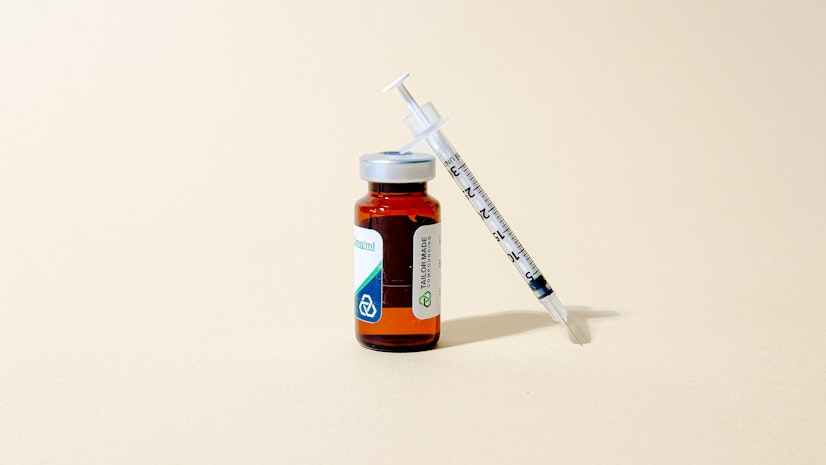
Image alt check: This article’s images are included to help illustrate the common “kit/vial” presentation used in many product listings.
Comparison of Common Options
Below is a practical, consumer-style comparison of common approaches people discuss when asking about CJC 1295 & Ipamorelin. These are not treatment instructions—just a “how people usually try it” snapshot.
| Format | Typical Dose/Use | Pros | Cons | Cost | Best For |
|---|---|---|---|---|---|
| CJC 1295 + Ipamorelin “combo kit” | Used according to label/vendor instructions; often taken at set intervals to support growth-hormone signaling. | Convenient to source together; simplifies planning for a first run. | Harder to isolate what caused any side effects or noticeable changes. | Mid to higher (bundle pricing varies); consider “price per gram” comparisons. | People who want a single-entry experiment with a consistent routine. |
| CJC 1295 only | Often chosen by users who prefer one variable first. | Cleaner feedback loop: easier to link effects to one compound. | May not match what you were hoping to feel (sleep/recovery changes vary). | Varies; sometimes cheaper than a combo kit. | Experimenters who want minimal complexity and better attribution. |
| Ipamorelin only | Often selected when users want the “GH release signaling” focus without adding CJC 1295. | Simplifies dosing math and reduces variables. | Felt effects may be subtle or inconsistent between individuals. | Varies; depends on vial strength and supplier. | People who prefer a stepwise approach and want to judge tolerance first. |
| Reconstituted multi-week regimen (planning-focused) | Users plan around storage stability and injection frequency to last multiple weeks. | Better adherence; fewer “running out” mistakes. | Increases the chance of errors if storage/handling guidance is unclear. | Mid; reduces per-week waste if you manage storage well. | People who can follow instructions carefully and keep records. |
| Starter bundle with CoA emphasis (quality-first choice) | Often a smaller, cost-contained first run to assess tolerance and response. | Less financial risk; easier to stop if side effects appear. | May limit how long you can test, since you’re using a smaller supply. | Lower upfront cost; overall cost depends on vendor pricing and batch size. | Cautious 55+ men who prioritize safety signals over “maximum experimentation.” |
Buying Framework and Red Flags
If your goal is to evaluate CJC 1295 & Ipamorelin benefits without turning the process into a gamble, use a checklist. Consider it your “consumer audit.”
- CoA request: Does the supplier provide a batch-specific Certificate of Analysis?
- Clarity on concentration: Can you confirm the vial concentration and how dosing volume is calculated?
- Storage guidance: Are storage instructions clear enough to reduce contamination risk?
- Injection supplies: Does the seller provide instructions about sterile technique expectations?
- Vendor consistency: Are they transparent about production and labeling, or do they “hand-wave” details?
- Unrealistic promises: Avoid any listing that claims guaranteed transformation, “medical-grade” outcomes, or “no side effects.”
- No documentation: If CoA is missing or generic, treat it as a major red flag.
- Price that seems too good: Low pricing can correlate with poor testing or inconsistent sourcing.
Practical cost reality: In consumer terms, many men find that the real cost isn’t just the product price—it’s the time, the syringe/injection supplies, and the “trial cost” if you end up stopping early due to side effects or mismatch between expectation and experience.

Common Mistakes and How to Avoid Them
Most of the issues people blame on CJC 1295 & Ipamorelin safety are often preventable consumer errors.
- Mistaking labeling for dosing: “mg per vial” is not the same as “your dose.” Calculate carefully using concentration.
- Skipping sterility basics: Injections require clean technique and proper storage. A little sloppiness can create irritation or worse.
- Changing too many variables: If you start CJC 1295 & Ipamorelin and also change your training, sleep schedule, and calories, you can’t interpret results.
- Extending experiments after side effects: If you get persistent headaches, tingling, or concerning symptoms, stop and reassess. “Push through” thinking is a common failure mode.
- Ignoring medical context: If you’re on medications, have known endocrine concerns, or your blood sugar fluctuates, don’t treat CJC 1295 & Ipamorelin as a generic supplement.
- Expecting immediate body-composition changes: If you judge only by the scale in week one, you may miss the slower signals (recovery, consistency, adherence).
What Research-Adjacent Consumers Ask About (YouTube)
For many men, video content helps them understand how users talk about scheduling, preparation, and subjective effects. Consider it supplementary, not a substitute for careful product documentation and medical guidance.
FAQ
Is CJC 1295 & Ipamorelin proven to improve body composition in men 55+?
Research supports growth-hormone signaling pathways in general, but “proven” body-composition results for CJC 1295 & Ipamorelin benefits as a specific product combination, dose, and long-term outcome are not established in the same way as standard medical treatments.
How long does it take to notice CJC 1295 & Ipamorelin benefits (sleep, recovery, or energy)?
In consumer experiences, any noticeable effect is often discussed over weeks rather than days. Some people report early sleep changes, while others only see differences after several weeks. If nothing changes after a reasonable short trial, it may indicate low individual response, dosing/quality mismatch, or that the basics (sleep, protein, training consistency) need attention.
What are common CJC 1295 & Ipamorelin side effects to watch for?
Reported possibilities include headache, tingling or numbness sensations, water retention, and changes in how you feel day-to-day. Because 55+ men often have more variables (medications, metabolic changes), it’s especially important to stop and get guidance if symptoms persist or worsen.
Can CJC 1295 & Ipamorelin combine with other supplements or medications safely?
Combination safety depends on the exact medication and supplement list. Growth-hormone signaling can interact with glucose handling and other endocrine pathways, and peptides are not universally “safe to stack.” If you want to combine CJC 1295 & Ipamorelin with anything beyond basic vitamins, talk with a qualified clinician first—especially with diabetes treatments, corticosteroids, or hormone-related therapies.
Oral vs injection: what’s the difference for CJC 1295 & Ipamorelin, and is there an alternative?
CJC 1295 and Ipamorelin are commonly sold as injectable peptides (powder vials requiring reconstitution). “Oral alternatives” may exist as different compounds, but that does not mean they match the same pathway, dosing precision, or safety profile. If you’re considering oral alternatives, treat them as different products—not interchangeable—unless a clinician confirms relevance and dosing logic.
A Practical 2-Week Experiment Framework
If you’re trying to evaluate CJC 1295 & Ipamorelin benefits without falling into the “blind hope” trap, run a structured, cautious short experiment. This isn’t about chasing dramatic results—it’s about observing tolerance and early signals.
| Day(s) | What to do | What to track |
|---|---|---|
| 1–2 | Start your routine using the product’s labeling guidance; keep training and caffeine consistent. | Sleep onset, awakenings, morning headache/tingling, appetite changes. |
| 3–7 | Maintain consistent hydration and protein. Avoid adding new supplements that can confound interpretation. | Soreness duration, energy stability, unusual swelling, blood sugar symptoms if relevant. |
| 8–10 | Review your notes and decide whether symptoms are improving, stable, or worsening. | Any side effect patterns and whether they correlate with dosing time. |
| 11–14 | Measure progress with trends, not single days: waist, weekly average weight, and training recovery. | Weekly average weight, waist change, recovery subjective rating. |
| End of day 14 | If side effects appear concerning or persist, stop and reassess. If you feel nothing, interpret that honestly. | Decision: continue, change variables, or stop the experiment. |
Failure red flags (stop and seek guidance): Severe or worsening headaches, persistent tingling/numbness, swelling beyond normal water shifts, fainting/dizziness, or any symptom that feels alarming for you personally—especially if you have relevant medical conditions.
About the Author
Jordan Mercer is a long-time fitness consumer reviewer who focuses on how training, sleep, and supplement/personal-care routines affect real-world outcomes for men in their 40s–60s. Over the past decade, Mercer has compiled practical product review notes emphasizing dosing clarity, documentation quality (like batch CoA availability), and failure cases—especially in “experiment stacking” situations where people change too many variables at once. This article reflects a consumer-review style perspective and includes cautionary framing rather than promises.
Disclaimer: Jordan Mercer is not a medical professional. This content is for educational and consumer information only and does not replace advice from a qualified healthcare provider. If you have health conditions or take medications, consult a clinician before using CJC 1295 & Ipamorelin.
Discussion